Crypto is functionally dead.
The smartest people in crypto aren't in crypto anymore

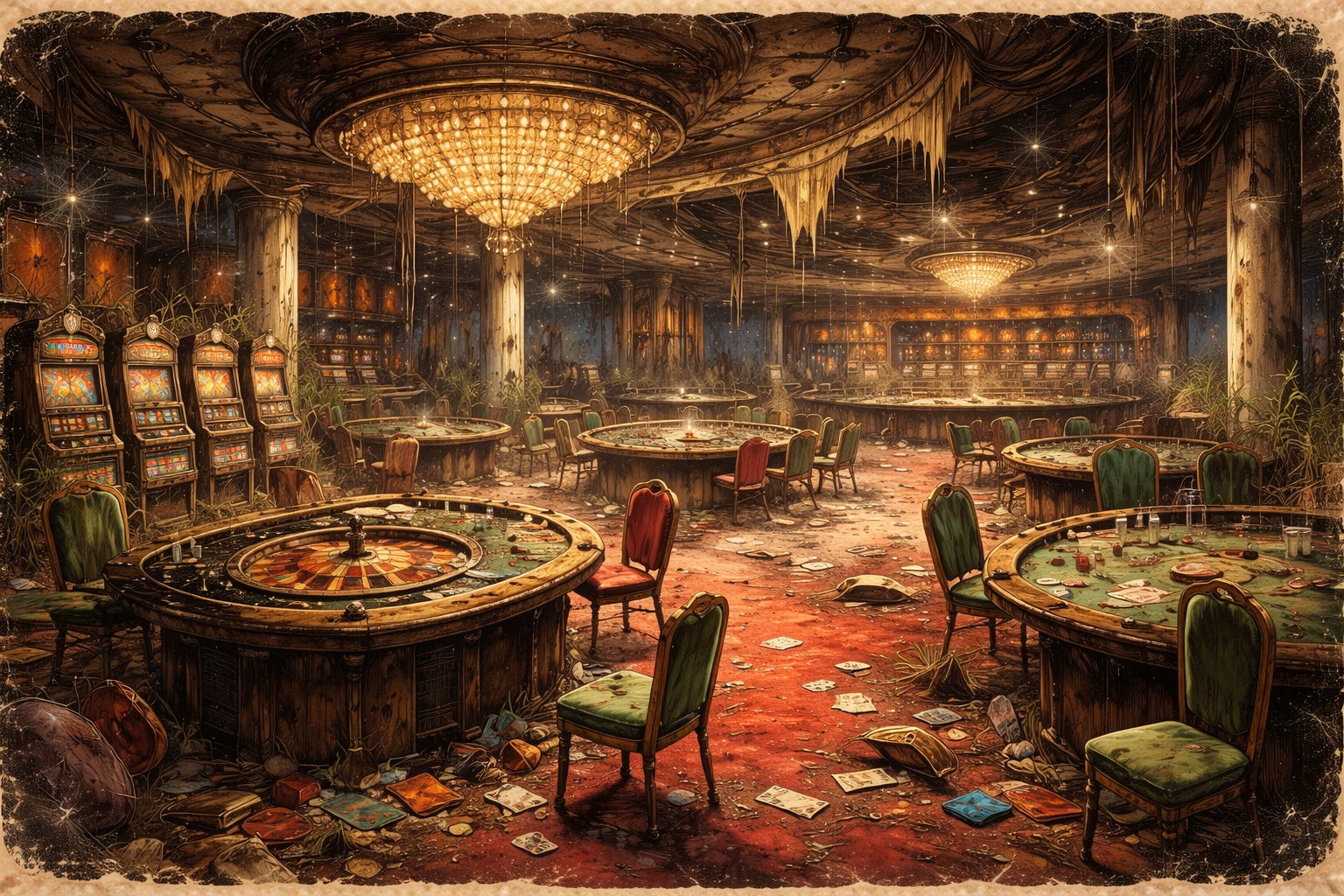
In January 2026, scammers launched a fake token called $CLAWD on the Solana blockchain, slapping the name of Peter Steinberger, creator of the open-source AI agent framework OpenClaw, onto a coin he’d never endorsed. It hit $16 million in market cap. Then Steinberger publicly disavowed it, and the thing cratered to basically nothing. His Discord got flooded, and his GitHub nearly got hijacked. He had to ban all crypto discussion from his own project’s community server.
“You are actively damaging the project,” he wrote to the people demanding he launch a token.
You could read this as one developer getting harassed, and it is.
But it’s also a clean little diorama of what crypto has become by early 2026: a leach that attaches itself to anything with momentum and tries to extract a token from it, whether the host organism consents or not.
And that, more than anything, is a sign of its utter and complete cultural and utilitarian collapse.
Good plumbing, no residents
Crypto people will tell you the technology is fine. And they’re right! Layer 2 ecosystems have matured. Stablecoins are useful for cross-border payments, and people actually use them for that. Developer tooling has improved considerabely since 2022. The infrastructure story is relatively solid.
But infrastructure was never really the thing that made crypto feel like it mattered. What made crypto feel like it mattered was the story: that this was the financial system rebuilt from scratch, by the people, for the people, outside the control of governments and banks and every other institution that had failed us in 2008. The mythic energy, the sense that you were participating in something that would restructure power itself.
That story is functionally dead.
The speculative // extractive layer of what we aspirationally termed an ecosystem has become so loud and so dominant that it has functionally becomes the ecosystem’s identity, regardless of what’s happening underneath. Memecoin churn, airdrop farming, perpetual leverage trading, Telegram “alpha” groups, botting, PVP cruelty and scam after scam after scam. The dominant and defining philosophy of crypto in 2026 is “I got in at 0.003 and you didn’t and fuck you.”
Who left and who stayed
When Bitcoin dropped 70% in 2022, the people who stayed could tell themselves they were the true believers weathering the storm. When venture capital, developer energy, and media oxygen simply moved somewhere else, there was no storm to weather. A room getting quieter.
Influencers pivoted from tokenomics to prompt engineering. Builders followed distribution. That feeling of being at the bleeding edge of what comes next, which had been crypto’s primary recruiting tool for a decade, packed up and relocated to foundation model labs and agent frameworks. Crypto stopped feeling like the next epoch and started feeling like an adjacent vertical, something with a booth at CES.
And the people who remained visible? Increasingly, they were the speculators and the partisans. Republican candidates adopeted pro-crypto rhetoric. Conferences featured overt partisan positioning. The thing that had once presented itself as borderless and post-political started looking like a wing of a specific American political coalition. You can argue this is strategically smart (regulatory clarity, friends in high places, etc.), and maybe it is. But the cost is coalition breadth. The global cypherpunk dream doesn’t survive being culturally tagged as a product of one country’s right flank.
Meanwhile, BlackRock got its spot ETF approved, which was supposed to be the ultimate validation moment. In a way it was. Bitcoin is now a legitimate portfolio allocation. Your financial advisor can put you in it. The rebellion is over; the asset class won.
But “the asset class won” is a strange kind of victory for something that marketed itself as a revolution.
Build something and they will tokenize it
Steinberger isn’t anti-blockchain as a technology, which is the part people keep missing. In a Forbes interview, he pointed out that “crypto has struggled with usability not because users lack interest but because most systems require them to think like a developer.” He can envision AI agents interacting with wallets, triggering on-chain events, managing DAO participation, automating workflows without taking custody of funds. He sees a version of the technology that works.
What he can’t tolerate is the culture that has metastasized around it. The harassment and the scams and the bone-deep assumption that every successful project must eventually become a chip in the casino, because what other purpose could anything possibly serve?
When a technology’s dominant culture becomes actively hostile to the people most capable of building on it, the technology’s decline becomes self-reinforcing. It doesn’t matter how good your Layer 2 rollups are if every talented developer who touches your ecosystem immediately gets swarmed by people trying to attach a Ponzi scheme to their work.
Why smart people disagree with me
Smart people will point out that cultural quiet phases have preceded every major crypto cycle. That institutional capital provides durability that retail mania never could. That speculative froth clearing is actually healthy, leaving behind the serious builders who’ll create the next wave of real applications. That FTX’s collapse, while devastating, ultimately purged the worst actors and strengthened the “not your keys” ethos.
These arguments aren’t wrong, exactly. But they depend on a model where crypto gets unlimited second chances to reinvent its cultural identity. The variable that’s changed is competition. In 2017, if you were a technically ambitious person who wanted to work on the frontier of computing, crypto was basically the only game in town. In 2026, AI is eating that entire recruitment pipeline. The talent that would have built the next breakthrough DeFi protocol is building agent frameworks instead.
You can survive a price crash. You can survive a scandal. Surviving the loss of your monopoly on “the future” is a different kind of problem, because it means every cycle of cultural reinvention has to compete for attention against something that currently feels more alive.
Bitcoin will probably be worth a lot of money for a long time. Some version of on-chain finance will persist and maybe even thrive in specific contexts. But the eschatolgical conviction that this was going to change everything is gone for most people outside the remaining core // true believers or the worst of the worst grifters. What’s left is a financial product, useful in some ways, with a community that increasingly talks only to itself while eating itself and alternating between lashing out and latching onto anyone who makes the foolish mistake of getting in arms’ reach.
The gap between the tech that might still matter and the culture that’s become unbearable is widening. And it’s not clear anyone knows how to close it.